Conference Dev Dashboard (private)
Tracking up-to-date progress on iLRN2026
- What's happening now
- Keynote & Featured Speakers dashboard
- iLRN2026 Leadership meeting updates
- iLRN2026 Leadership Meeting, Nov 26 2025
- Conference Leadership Update Template
- iLRN2026 Leadership Meeting, Dec 10 2025
- iLRN2026 Leadership Meeting - Nov 14, 2025
- iLRN2026 Leadership Meeting, February 4th, 2026
- VIRTUAL CAMPUS
- iLRN2026 WebSite Updates
- Awards 2026 Process Codex
- iLRN2026 Program Chairs
- iLRN2026 Program Chairs - General info and links
- iLRN2026 iLEAD Program Chairs
- iLRN2026 Academic Program Chairs
- iLRN 2026 Registration
What's happening now
Post current assignments and deadlines progress.
November 26
- Promoting iLEAD and State of XR, webinars have been planned
- Social Media announcements for Keynote and feature speakers
- Academic papers reviews are in progress
- DC extenssion has been promoted in social media and via the international chairs
- Keynote and Feature speakers have been promoted on the website and on Social Media
- OnlineCampus is being developed
October 26:
- Archived iLRN2025 at Initiatives > Conferences > iLRN2025: https://www.immersivelrn.org/ilrn2025/ilrn2025-menu/
- Removed the iLRN2025 menu from the main menu of the website to reduce potential confusion.
October 22:
- Easychair open for new academic submissions until October 26th (upon Org Com members' requests).
October 12:
- Added travel information to the Travel & Accommodations page.
October 10:
- I updated the mailing list with people who signed up to our website from the last update (April) to current day.
- The October 2025 newsletter was sent to our mailing list.
September 24:
- The Organizing Committee held its kickoff meeting. Please see the meeting minutes for details.
- The following changes were made to the website.
- Moved iLRN2026 menu before iLRN2025 in the top menu bar.
- Registration and Fees page is now available on the Attending menu.
- Copied the information about Visa/Invitation Letters to the "Passports & Visas" section of the Travel and Accommodations page.
September 19:
- Featured speaker Daniel Mitelpukt (in person) submitted presentation information through Tally.
- The Keynote and Featured Speakers page on the website has been updated with the new information.
September 18:
- Keynote speaker Professor David Brown (in person) submitted presentation information through Tally.
- The September 2025 Newsletter was sent to our mailing list.
September 7: Featured speaker Dr. Michael Paraskevas (in person) submitted presentation information through Tally.
August 21: Keynote speaker Professor Guido Makransky (in person) submitted presentation information through Tally.
July 24:
- Keynote speaker Professor Eleni A. Kyza (in person) submitted presentation information through Tally.
- The July 2025 Newsletter was sent to our mailing list. We will not sent a newsletter in August.
July 23: Featured speaker Dr. Elina Megalou (in person) submitted presentation information through Tally.
June 9: The June 2025 Newsletter was sent to our mailing list.
Keynote & Featured Speakers dashboard
Keynotes
In-person keynotes
Keynote in person - Professor David Brown

Keynote Title: MetaHumans, Virtual Reality and Privacy Preserving Approaches to Support Children and Young People with Learning Disabilities and Autism
Title & Affiliation: Professor David Brown, Professor of Interactive Systems, Nottingham Trent University
Time Schedule: TBA
This talk will explore the role of MetaHumans and Virtual Reality to support the health and wellbeing of children and young people with learning disabilities and autism, whilst being mindful of our collective responsibility to proceed in an ethical manner. Three projects which illustrate these tenets will be covered: (1) Combing electroencephalogram data and VR based spatial navigation performance metrics to detect early cognitive decline in young adults with Down’s Syndrome. (2) The use of mimicry tasks to train facial emotion expression recognition in individuals with autism and alexithymia leveraging the MetaHuman Framework. (3) A privacy-preserving approach for ‘Meltdown’ detection in children with autism using machine learning models combining facial emotional expressions, involuntary gestures and physiological data to infer the very early stages of emotional dysregulation – the “rumble stage”, so that teaching staff, parents and carers can introduce evidence-based well-being interventions in a timely manner.
Biography
David is Chair of the International Conference on Disability, Virtual Reality and Associated Technology. He is both a Principal and Co-Investigator on a range of Horizon Europe, British Council and UKRI projects investigating the role of multimodal affect recognition, eXplainable and privacy preserving AI to promote inclusive education, and the positive mental and clinical wellbeing of students with Intellectual Disabilities and Autism. He is Associate Editor for Frontiers: Virtual Reality in Medicine (https://www.frontiersin.org/journals/virtual-reality/sections/virtual-reality-in-medicine) and Editorial Board Member for Virtual Worlds.
Keynote in person - Professor Eleni A. Kyza

Keynote Title: Bridging the Virtual and the Real: Designing XR for Agency, Engagement, and Impact
Title & Affiliation: Professor Eleni A. Kyza, Cyprus University of Technology
Time Schedule: TBA
Extended Reality (XR) technologies can reshape learning by enabling immersive experiences that bridge formal and informal learning. Designing XR for education goes beyond creating engaging experiences: it is a purposeful activity, aiming to foster meaningful skills, attitudes, and knowledge. In my presentation, I will share findings from a design-based research program focused on developing augmented and virtual reality learning environments that promote engagement, motivation, and learner agency. I will discuss evidence from studies conducted with learners ranging from elementary school to higher education, in history education and cultural heritage contexts. Our research employed mixed methods, triangulating data from multiple sources to gain a deeper understanding of how learners engaged with the XR learning ecosystem. Analyses led to insights that can inform efforts to personalize learning in immersive contexts. I will conclude with key takeways, including the potential of GenAI to scale personalized learning and enhance the effectiveness of XR-based experiences.
Biography
Dr. Eleni A. Kyza is a Professor in Information Society in the Department of Communication and Internet Studies at the Cyprus University of Technology, where she leads the Media, Cognition, and Learning Research Group (http://mcl.cut.ac.cy). She has a background in educational technology, cognitive science and the learning sciences, and a continuous interest in how digital technologies can support learning, critical reflection, and the development of active and informed citizens. Her research investigates technology-enhanced learning environments to support motivated, meaningful, and reflective practices. Her work has examined, among others, inquiry-based learning, teacher learning and professional development, scaffolding student learning, collaborative learning, and media & information literacy on social media. With her colleagues, she has developed and empirically investigated learning technologies, such as the web-based learning and teaching platform STOCHASMOS for promoting evidence-based reasoning in science education, TraceReaders, an augmented reality platform for scaffolding students’ inquiry learning in informal and non-formal contexts, and CompARe, a mixed reality environment. She has served as Editor-in-Chief of Instructional Science President of the European Association for Research on Learning and Instruction (EARLI) (2021-2023), President of the International Society of the Learning Sciences (ISLS). She is an Inaugural Fellow of ISLS.
Keynote in person - Professor Guido Makransky

Keynote Title: Moving from Information to Experience: Exploring the Potential of Virtual Reality in Education
Title & Affiliation: Professor Guido Makransky, University of Copenhagen
Time Schedule: TBA
I will present the current state of the art in research on learning with immersive technology including immersive virtual reality (IVR). I will begin by outlining why this area is of growing importance in education. Next, I will summarize key empirical findings and highlight several theory-driven frameworks that provide insight into the cognitive and affective mechanisms involved in IVR-based individual and collaborative learning. Finally, I will discuss a range of application areas where this knowledge can be used to enhance the effectiveness of education and related fields.
Biography
Professor Guido Makransky is the leader of the Virtual Learning Lab (https://psychology.ku.dk/vll/) and head of the SCOPE section (Social, Cultural, Organisational, Personality and Educational Psychology) at the Department of Psychology, University of Copenhagen. His research explores how emerging technologies such as virtual and extended reality, immersive simulations, and generative AI influence learning, collaboration, and behavioural change. His current projects combine controlled laboratory studies with real world experiments in classrooms and organizations, integrating theories from educational psychology and related fields with contemporary measurement methods. The overarching goal of his research is to provide evidence-based insights for designing learner centered AI and XR supported learning interventions that help educators, trainers, and stakeholders harness emerging technologies to improve the quality of education and training.
Online Keynotes
Online Keynote Professor Barney Dalgarno

Keynote Title: Exploring Learning Affordances of Mixed Reality Environments
Title & Affiliation: Professor Barney Dalgarno, Executive Dean of the Faculty of Education, University of Canberra
Time Schedule: TBA
This presentation will discuss potential learning affordances of Mixed Reality (MR) environments, extending the 3D Virtual Environment affordance model (Dalgarno & Lee, 2010). The presentation will begin with a discussion of technology changes and new applications since Milgram and Kishino (1994) proposed their virtuality continuum and will identify enhancements required within an updated MR model. Common and unique characteristics across three MR categories will be identified along with common and unique afforded learning tasks and learning benefits. To help unpack this proposed MR affordance model current and future applications of MR learning environments will be described, harnessing developments in MR and GenAI technologies. Finally, ways in which these applications might align with emerging models of cognition and learning will be discussed.
Dalgarno, B., & Lee, M. J. (2010). What are the learning affordances of 3-D virtual environments? British Journal of Educational Technology, 41(1), 10-32.
Milgram, P., & Kishino, F. (1994). A taxonomy of mixed reality visual displays. IEICE TRANSACTIONS on Information and Systems, 77(12), 1321-1329.
Biography
Professor Barney Dalgarno is Executive Dean of the Faculty of Education at the University of Canberra in Australia. Professor Dalgarno’s research interests include the educational and social impact of digital technologies, the learning affordances of virtual, augmented and mixed realities, and the future of universities and schools in an age of digital disruption. He has had international influence through 140 publications, award winning online learning innovations and editorship of educational technology journals, books and conference proceedings.
Feature Talks
In-person Feature talks
Feature talk in-person - Dr. Elina Megalou

Feature Talk Title: Interactive and Immersive Learning at Scale: Greece’s National Infrastructure
Title & Affiliation: Dr. Elina Megalou, Director, Directorate of Educational Technologies, Training & Certification, CTI “Diophantus”
Time Schedule: TBA
How can immersive learning scale nationally to benefit every student and teacher in public education? This talk presents Greece’s strategy for advancing interactive and immersive learning by leveraging Open Educational Resources (OERs) and robust national infrastructures: the Photodentro Digital Repositories and National OER Aggregator, the collaborative educational platform e-me, the Digital Library of Interactive Textbooks, and the new Virtual Innovation Center. Developed and maintained by CTI “Diophantus” under the Ministry of Education, these systems ensure equitable access to high-quality interactive content and collaborative learning across all Greek schools. They host thousands of open digital learning objects, including simulations, visualizations and virtual environments, fostering active, student-centered learning, while the new Innovation Center’s repository, icRepo, focuses on immersive resources, including Augmented and Virtual Reality (AR/VR). Through this infrastructure, Greece has built and continues to expand a scalable, sustainable ecosystem that empowers educators and engages students through immersive digital experiences.
Biography
Dr. Elina Megalou is the Director of the Educational Technologies, Training, and Certification Directorate at CTI “Diophantus,” the technological arm of the Greek Ministry of Education. With a Diploma in Computer Engineering and a PhD in Data and Knowledge Engineering, she has over 25 years of experience in digital education. Since joining CTI in 1988, she has coordinated numerous national and EU projects, including the large-scale national program “Digital School I & II” (2010–2021) for the digital transformation of Greek schools. She has designed and leads key national platforms, including Photodentro, Greece’s ecosystem of Open Educational Resource (OER) Repositories and National Aggregator; the Interactive Textbooks Digital Library; and the “e-me” digital collaborative learning platform, which serves 700,000 users. Her research interests focus on digital educational repositories, OERs, metadata, digital libraries, and platforms that foster active and collaborative learning.
Feature talk in-person - Daniel Mitelpukt

Feature Talk Title: Turning the head-mounted-device on its head: adventures in further extended reality
Title & Affiliation: Daniel Mitelpukt, Director of Digital Media Lab, Imperial College London
Time Schedule: TBA
At the intersection of creative tech and STEMB higher education, Imperial College London’s Digital Media Lab develops interactive simulation and visualization solutions and experiences. Sharing examples of XR and ‘further extended reality’ work, the session will propose a way of looking afresh at familiar challenges.
From digital twins of physical teaching labs to bespoke 3D-printed VR controllers and pixel-streamed simulations in ‘traditional’ lecture theatres, work shared would point to the benefit of spending more time on questions, rather than knee-jerking into end-modality-defined projects (or teams).
What if the key to fully scaling in-house VR in universities is not in VR at all? What if ethical adoption of Gen-AI nudges us to question how human our praxis is? What if device affordances and limitations could lead to better learning design? Could investing in better digital learning spaces actually improve our physical ones? Who better to ponder these with than iLRN colleagues..?
Biography
Daniel Mitelpunkt is Founder and Director of the Digital Media Lab at Imperial College London, where he leads strategy, operations, creative direction and R&D in applied media. As the College’s senior applied media officer, he shapes institute-wide policy and planning for digital media and immersive learning. Daniel previously worked as Executive Producer on issues-based and healthcare content for global corporations, NGOs and universities. At Imperial, he has pioneered scalable, cross-disciplinary workflows, collaborating with academic and professional colleagues, as well as students and creative industry practitioners, for improved learner experience. He is a passionate advocate for embedding creative tech within higher education, fostering bi-lateral, national and international collaborations to advance this agenda.
Feature talk in-person - Professor Michalis Paraskevas

Feature Talk Title: From Collaboration to Transformation: How eTwinning shapes digital, STEM and AI-ready teachers
Title & Affiliation: Dr. Michalis Paraskevas, Professor at the University of Peloponnese, Vice-President of the CTI “Diophantus”, Head of NSO eTwinning
Time Schedule: TBA
eTwinning is a flagship programme of the European Commission, that promotes educational innovation, collaborative learning, digital skills and intercultural understanding. Since 2005, Greece has developed an active community of teachers, schools and pedagogical students, implementing numerous collaborative projects that have received recognition at a European level. The Greek National Support Organization (NSO) promotes modern teaching practices and ICT skills through initiatives such as webinars, contact seminars, professional development workshops, online courses, MOOCs, STEM and AI activities, and the Initial Teacher Education (ITE) initiative. Quality labels, national and European conferences, and international competitions further encourage excellence and exchange. Best practices are disseminated through a strong network of ambassadors and institutional partners, and the programme's impact is extended across the education community through publications and digital repositories. Operated by the CTI “Diophantus” in partnership with the Ministry of Education, the Greek NSO demonstrates how eTwinning can transform educational culture and build resilient learning communities.
Biography
Dr. Michalis Paraskevas is Professor at the Department of Electrical and Computer Engineering, University of Peloponnese, specializing in signal processing systems, broadband networks, and telematic services. He is Vice-President of the Computer Technology Institute & Press “Diophantus”, Coordinator of the Greek School Network, and Head of the National eTwinning Support Organization in Greece. He is also responsible for the national stop-bullying.gov.gr platform. His research interests span digital signal processing, information theory, next generation networks, machine learning for image and natural language processing, and the digital transformation of education. He has published more than 100 papers in international journals and conferences, authored four university textbooks, and served on over 50 editorial boards and program committees. His work has been cited more than 1,000 times and referenced in over 70 patents. With thirty years of professional experience in broadband networks, telecommunications, e-government, and e-learning services, he has directed numerous R&D projects with national and international recognition. He has served as Head of the Department of Electrical and Computer Engineering (2019–2021) and currently coordinates the NetLearn research group at CTI. He teaches undergraduate and postgraduate courses on signal processing, information theory, next generation networks, and advanced educational technologies at the Universities of Peloponnese and Thessaly.
Online Feature Talk Presentations
Feature talk Online - Professor Panayiotis Koutsabasis & Spyros Vosinakis
Online Joint Feature Talk Title: Meaningful Immersion: Human-Centered Design for Learning and Cultural Heritage
Title & Affiliation:
Professor Panayiotis Koutsabasis, University of the Aegean, Associate Professor
Spyros Vosinakis, University of the Aegean
Time Schedule: TBA
The design of immersive experiences in education and cultural heritage is continuously explored to enhance engagement, understanding, and emotional connection. These systems range from mobile and desktop applications to room-scale mixed reality installations that integrate sensing, display, and multimodal interaction technologies. Yet their value lies not in technological novelty but in how they address the cognitive and emotional needs of users, the context of use, and the spatial and interactional affordances of each experience.
This featured talk presents methods and practices for designing and evaluating immersive learning experiences through examples from real-world projects. It highlights how design intent, iterative prototyping, and formative evaluation work together to create engaging, human-centered experiences. Drawing on empirical insights, we identify recurring principles and patterns for designing interactive environments that are both aesthetically compelling and pedagogically effective, and we discuss future directions toward hybrid, tangible, and playful immersive learning.
Biography: Professor Panayiotis Koutsabasis

Panayiotis Koutsabasis is Professor (Human-Computer Interaction) at the University of the Aegean, Syros island, Greece.
He has been teaching for over 20 years at undergraduate and postgraduate level courses in the subjects of Human-Computer Interaction and Informatics. He has supervised 2 PhD theses, and > 100 M.D. and M.Sc. theses in the above subjects. He is the author of two books (in Greek) on the subject of human-computer communication.
He has published more than 100 papers in international scientific journals, conferences and book chapters, including Int. J. of Human-Computer Studies, Int. J. of Human-Computer Interaction, Behaviour and Information Technology, Virtual Reality, Presence, Design Studies, CoDesign, BJET, ACM Computing in Cultural Heritage, J. of Usability Studies, Mobile HCI, etc. His published work has an h-index: 21 according to Scopus and h-index: 28 according to Google Scholar. He is a regular reviewer of papers in approximately 40 international conferences and 30 journals. He is a regular member of the organizing committee of the ACM CHIGreece conference, which has as its main purpose the interaction and dissemination of results of the Greek community of scientists in the field of Human-Computer Interaction. He is a member of ACM, ACM SIGCHI, ACM SIGCHI Greek chapter, and EUSET.
Research Interests: Human-Computer Interaction and Design (HCI and Design): design methods, procedures, guidelines, models, etc.; Natural user interactions (NUIs), especially kinesthetic and aerial interaction with gestures, interaction with mixed and augmented reality systems, interaction with portable devices, etc.; User experience (usability, accessibility) and evaluation studies of HCI; Research through design in the fields of: digital cultural heritage, education and learning, collaborative work, experiential tourism, etc.
Biography: Associate Professor Spyros Vosinakis

Spyros Vosinakis is an Associate Professor at the Department of Product and Systems Design Engineering of the University of the Aegean, specializing in Virtual Reality. His research interests include Multi-User Virtual Environments, Intelligent Virtual Agents, Serious Games, and 3D User Interfaces, as well as their applications in the fields of culture, tourism, and education. He has published one book and more than 100 scientific papers in international journals, conference proceedings, and book chapters. His published work has received over 2,400 citations. He has participated as a researcher in seventeen funded research and development projects, serving as coordinator or principal investigator in seven of them, and has over 20 years of experience as a developer of interactive systems and 3D applications for companies and research projects. Since 2019, he has been the Director of the Interactive Systems Design Laboratory.
Feature talk Online - Vassiliki Bouki
Online Feature Talk Title: From Plato’s Cave to Immersive Learning in the AI Era
Title & Affiliation: Dr Vassiliki Bouki, Principal Lecturer, University of Westminster
Time Schedule: TBA

iLRN2026 Leadership meeting updates
iLRN2026 Leadership Meeting, Nov 26 2025
iLRN2026 Leadership Meeting - Nov 26, 2025 (template ready)
Leadership Sync Update — 26 Nov 2025
From: General Chairs
To: iLRN2026 Organizing Committee
Meeting Type: Leadership Sync (GC + PC + ET)
Attendance:
- Daphne
- Tassos
- George
- Julie
- Jonathon
1. Headline (1–2 sentences)
- Local team created content with images and descriptions for the venue and available equipment. Access to the venue with public transportation. The Website needs to be updated accordingly. [Codex link]
- Preparing the pre-conference information [Codex Link]
- Prepare a message to go out with the notification to authors about the social program and the become members [Daphne to prep a short paragraph fro the social program participation, to book accommodation early, and Jonathon to prep a paragraph for the members invitation, action to Julie to complite the message and send it out to authors]
- Timeline for messages:
2. Progress Since Last OC Meeting
- Venue update and codex created [Codex link]
- Web site updates for keynotes, program updates
- Social Media team has been provided the keynote/feature speakers cards and message to be announced on social media with reminder for DC extenssion, iLEAD deadline and encourage participants to make booking soon [Discord link].
3. Key Decisions
- Decision:
-
Website: Update all keynote and feature speaker details; request web team to create pages for in-person (academic & social) and online program. (Action: Daphne) Done
-
Social Media: Share final graphics for speaker announcements and begin rolling promotions. (Action: Daphne) Done
-
Author Communication: Remind authors to book accommodation early when sending decision notifications. (Action: Daphne) Done [a message was sent to Julie to be included with the authors notification of acceptance + a message on social media when announced keynotes]
Registration for academic paper authors and presenters is required by February 15, 2026. At least one author who will present the paper must be registered in the “Academic Paper Author & Presenter” category (regular or student) for the presentation to be scheduled in the program and the submission to be published in the Conference Proceedings. Please follow the registration link to complete your registration.
As the end of June marks the peak tourist season in Greece, we strongly recommend booking your flights and accommodation as early as possible, as prices and availability will be affected. We also encourage you to join the social trip to Nafplio on Friday, June 26, 2026—a fantastic opportunity to experience a beautiful part of Greece outside Athens. As buses must be booked in advance and places are limited, participation will be on a first-come, first-served basis, so please proceed with your conference registration early to avoid disappointment.
“Academic Paper Author & Presenter” this needs to be change to iLEAD categories when the iLEAD team will communicate the notification of acceptance
-
Program Update: Remove Aitherion Experience; replace with visit to the Science & Technology Museum located near the venue. (Action: George K.) Done Web team has been informed
-
Promotional Materials: Create a promotional video for Athens, online components, and DC. (Action: Tassos & George) in progress, Tassos assigned this task to a team
-
Awards Process: Communicate with the Awards Team to ensure shared understanding and workflow alignment. (Action: Daphne) in progress
4. Current Focus / What’s Next
-
Finalising content for program webpages (in-person and online).
-
Preparing coordinated promotional campaign (keynotes, DC, Athens, online program).
-
Drafting the webinar plan and video script for promotional materials.
-
Confirming chairs for Publications, Social Media & Marketing, International Engagement, and shadow Academic Program Chairs.
Upcoming milestones:
-
Nov 20: Website updates for program pages completed. - Not completed yet
-
Nov 25: First social media push for speaker announcements. - Not completed yet
-
Dec 1: Draft promotional video and webinar outline ready for review. - In progress
-
5. Asks for the Organizing Committee
-
Upcoming milestones:
-
-
Track Chairs: Confirm review boards and ensure all reviewers are active by Nov18 - Done
-
Web Team: Prioritise creation of in-person schedule pages and online program structure.
-
Social Media Team: Begin rolling campaigns for keynotes, features, DC extension, and venue promotion - timeline has not been agreed, graphics and text has been created and communicated in [Discord link].
-
Local Team: Confirm logistics for the Science & Technology Museum activity and provide details for inclusion in the program. George is working on this
-
-
6. Risks / Needs Attention (Optional, ≤2 bullets)
-
Risk of delays in website updates impacting early promotion.
-
Limited time window for accommodation booking—needs prominent communication to authors.
Next Leadership Sync: {{date}}
Next leadership meeting
iLRN2026 Quick Links
- Call for Papers and Proposals
- Keynote & Featured Speakers
Conference Leadership Update Template
This Conference Dev Dashboard Codex template incorporates a practice that many associations use (IEEE, ACM SIG conferences, SXSW-style multimedia events) use for their cadences, where the emphasis is on
progress,
blockers, and
asks.
- - - - - - - - Conference Leadership Update Template - - - - - - -
Leadership Sync Update — {{Date}}
From: General Chairs
To: iLRN2026 Organizing Committee
Meeting Type: Leadership Sync (GC + PC + ET)
1. Headline (1–2 sentences)
One clear sentence about the focus of this week’s leadership meeting and the main outcome.
Example: “We finalized the Call for Papers launch date and agreed to coordinate social media assets with the Sponsorship team.”
2. Progress Since Last OC Meeting
- {{Short bullet #1}}
- {{Short bullet #2}}
- {{Short bullet #3}}
3. Key Decisions
- Decision: {{Plain sentence, e.g., “Abstract deadline moved to Nov 15.”}}
- Owner: {{Person/Role}}
4. Current Focus / What’s Next
- {{What leadership is working on now}}
- {{Upcoming milestone (date)}}
5. Asks for the Organizing Committee
- {{Ask #1, e.g., “Track chairs: confirm review board by Oct 10.”}}
- {{Ask #2}}
6. Risks / Needs Attention (Optional, ≤2 bullets)
- {{Briefly note only if something requires wider awareness.}}
Next Leadership Sync: {{date}}
- - - - - - - - - - - - - - - - - - - - - - - - - - - - - - - - - - -
iLRN2026 Quick Links
- Call for Papers and Proposals
- Keynote & Featured Speakers
iLRN2026 Leadership Meeting, Dec 10 2025
iLRN2026 Leadership Meeting - Dec 10, 2025 (template ready)
Leadership Sync Update — 10 Dec 2025
From: General Chairs
To: iLRN2026 Organizing Committee
Meeting Type: Leadership Sync (GC + PC + ET)
Attendance:
- Daphne
- Tassos
- George
- Julie
- Jonathon
1. Headline (1–2 sentences)
- Special issues have been accepted by the Publications team-Editors to communicate with GG and coordinate announcements
- Prepare a message to go out with the notification to authors about:
2. Progress Since Last OC Meeting
- Venue update and codex created [Codex link]
- Web site updates for keynotes, program updates - Codex has been updated by Daphne
- Social Media team has been provided the keynote/feature speakers cards and message to be announced on social media with reminder for DC extenssion, iLEAD deadline and encourage participants to make booking soon [Discord link].
3. Key Decisions
Allocate more reviews to GG to have the 3 required
4. Current Focus / What’s Next
-
Finalising reviews and decisions
5. Asks for the Organizing Committee
-
Upcoming milestones:
-
6. Risks / Needs Attention (Optional, ≤2 bullets)
-
Risk of delays in website updates impacting early promotion.
-
Limited time window for accommodation booking—needs prominent communication to authors.
Next Leadership Sync: {{date}}
Next leadership meeting
iLRN2026 Quick Links
- Call for Papers and Proposals
- Keynote & Featured Speakers
iLRN2026 Leadership Meeting - Nov 14, 2025
Leadership Sync Update — Nov 14 2025
From: General Chairs
To: iLRN2026 Organizing Committee
Meeting Type: Leadership Sync (GC + PC + ET)
Attendance:
- Daphne
- Tassos
- George
1. Headline (1–2 sentences)
- Finalization of keynote and feature speakers and web site updates
- Decided on final design for keynotes and feature talks for social media [link to canvas]
- Create the web pages for in-person academic and social
- Create the online program
- Discussed the gift content of the conference bag which is another sponsorship of local sponsors
- Finalised that the conference welcome will be at the Main presentation room at Propulaia at 9-11 and the rest of the presentations will start at 11 using lecture theaters A and B (118 and 125 people).
- Finalised the conversation about the rooms to be booked.
- Identify publications chair, social media & marketing, international chair, academic program chairs shadowing.
- Organise a webinar and create a video to promote Athens and online and DC.
- Communication with the awards team to explain the process.
2. Progress Since Last OC Meeting
- Update the https://www.immersivelrn.org/ilrn2026/call-for-papers/ page with the name of the keynote and feature speakers and provide the link https://www.immersivelrn.org/ilrn2026/keynote-featured/
- Keynote in person - Professor David Brown
- Keynote in person - Professor Eleni A. Kyza
- Keynote in person - Professor Guido Makransky
- Feature in person - Dr. Elina Megalou
- Feature in person - Daniel Mitelpukt
- Feature in person - Professor Michalis Paraskevas
- ----------------------
- Keynote online - Professor Barney Dalgarno
- Feature online - Professor Panayiotis Koutsabasis, Assos Spyros Vosinakis
- Feature online - Jeehon
- Feature online - Vassiliki Bouki
- From the the CFP page [https://www.immersivelrn.org/ilrn2026/call-for-papers/ take
3. Key Decisions
- Decision:
-
Website: Update all keynote and feature speaker details; request web team to create pages for in-person (academic & social) and online program. (Action: Daphne)
-
Social Media: Share final graphics for speaker announcements and begin rolling promotions. (Action: Daphne)
-
Author Communication: Remind authors to book accommodation early when sending decision notifications. (Action: Daphne)
-
Program Update: Remove Aitherion Experience; replace with visit to the Science & Technology Museum located near the venue. (Action: George K.)
-
Promotional Materials: Create a promotional video for Athens, online components, and DC. (Action: Tassos & George)
-
Awards Process: Communicate with the Awards Team to ensure shared understanding and workflow alignment. (Action: Daphne)
4. Current Focus / What’s Next
-
Finalising content for program webpages (in-person and online).
-
Preparing coordinated promotional campaign (keynotes, DC, Athens, online program).
-
Drafting the webinar plan and video script for promotional materials.
-
Confirming chairs for Publications, Social Media & Marketing, International Engagement, and shadow Academic Program Chairs.
Upcoming milestones:
-
Nov 20: Website updates for program pages completed.
-
Nov 25: First social media push for speaker announcements.
-
Dec 1: Draft promotional video and webinar outline ready for review.
-
5. Asks for the Organizing Committee
-
Upcoming milestones:
-
-
Track Chairs: Confirm review boards and ensure all reviewers are active by Nov18.
-
Web Team: Prioritise creation of in-person schedule pages and online program structure.
-
Social Media Team: Begin rolling campaigns for keynotes, features, DC extension, and venue promotion.
-
Local Team: Confirm logistics for the Science & Technology Museum activity and provide details for inclusion in the program.
-
-
6. Risks / Needs Attention (Optional, ≤2 bullets)
-
Risk of delays in website updates impacting early promotion.
-
Limited time window for accommodation booking—needs prominent communication to authors.
Next Leadership Sync: {{date}}
Next leadership meeting
iLRN2026 Quick Links
- Call for Papers and Proposals
- Keynote & Featured Speakers
iLRN2026 Leadership Meeting, February 4th, 2026
Leadership Sync Update — February 4th, 2026
From: General Chairs
To: iLRN2026 Organizing Committee
Meeting Type: Leadership Sync (GC + PC + ET)
1. Headline
We worked on a plan for updating the iLRN2026 Cost Model and using that to determine discounts for Organizing Committee members' registrations. Also identified Organizators tasks that should be focused on now: Awards, Local Org costs, non-presenter Attendee wayfinding on the iLRN website, online campus development
2. Progress Since Last OC Meeting
- Estimated 15 members of DSAI / TechEDU have submitted papers to iLRN (8 of them are iLRN Organizing Committee members).
- Registration pathways in CVent have been approved with comments (esp. Al Bodzin)
3. Key Decisions
- Decision: General Chairs to work with Tryfon Sivenas and Apostolos Kostas to get a more complete & current cost estimate for costs for attendance in Athens (one-time costs & per-person costs) to get a better picture of our overlay before registration opens. We can then share with Patrick and update our Cost Model.
- Owner: General chairs
- Decision: Whitelist of DSAI / TechEDU members with papers to be shared
- Owner: Tassos
- Decision: Reach out to Sai re: Awards development and engage Organizators to assist: Jule, Program Chairs, Campus Coordinator (Charlene)
- Jury Panels
- Award certificates in Athens & Campus digital image / exhibit (for taking selfies -> social media)
- Online & Athens scripting and resourcing for the events
- Owner: Jonathon
4. Current Focus / What’s Next
-
Need to go live with the registration.
-
Outstanding issues:
- ETPE discount. Need to create an interest form. Who should it go to? (Tassos, George?)
- Name, ETPE registration info, ???
- Are there going to be dinner options (vegetarian, gluten-free, etc.)? People need to select this during registration.
- ETPE discount. Need to create an interest form. Who should it go to? (Tassos, George?)
- Need a clear view of the budget with best estimates of online vs Athens registrations with FULL number of Organizing Committee members and their modality (Athens vs Online)
5. Asks for the Organizing Committee
- We need feedback from "naive" first-timers to our website to see how usable / navigable the site is to:
- Generate interest in the conference as a non-presenter
- Find the relevant information as an attendee (online AND in Athens)
- How to contact the organization if questions / by category or type of question
- Program planning templates for Athens and Online
- Athens:
- Organize by day / time
- Organize by track
- Organize by room / venue
- Online
- Organize by time zone
- Organize by track
- Organize by online mode (FrameVR vs Zoom vs Roblox, etc)
- Athens:
- Awards planning for Online and Athens
- Location
- Staging
- EmCee / announcements
- Preparations
- Run-of-Show (timeline with specific details in sequence for the event)
Next Leadership Sync: February 18, 2026
- Jonathon will be traveling & not be available
VIRTUAL CAMPUS
IN PROCESS:
Changing the URL of the FrameVR to https://framevr.io/ilrn-conference (currently a trial frame)
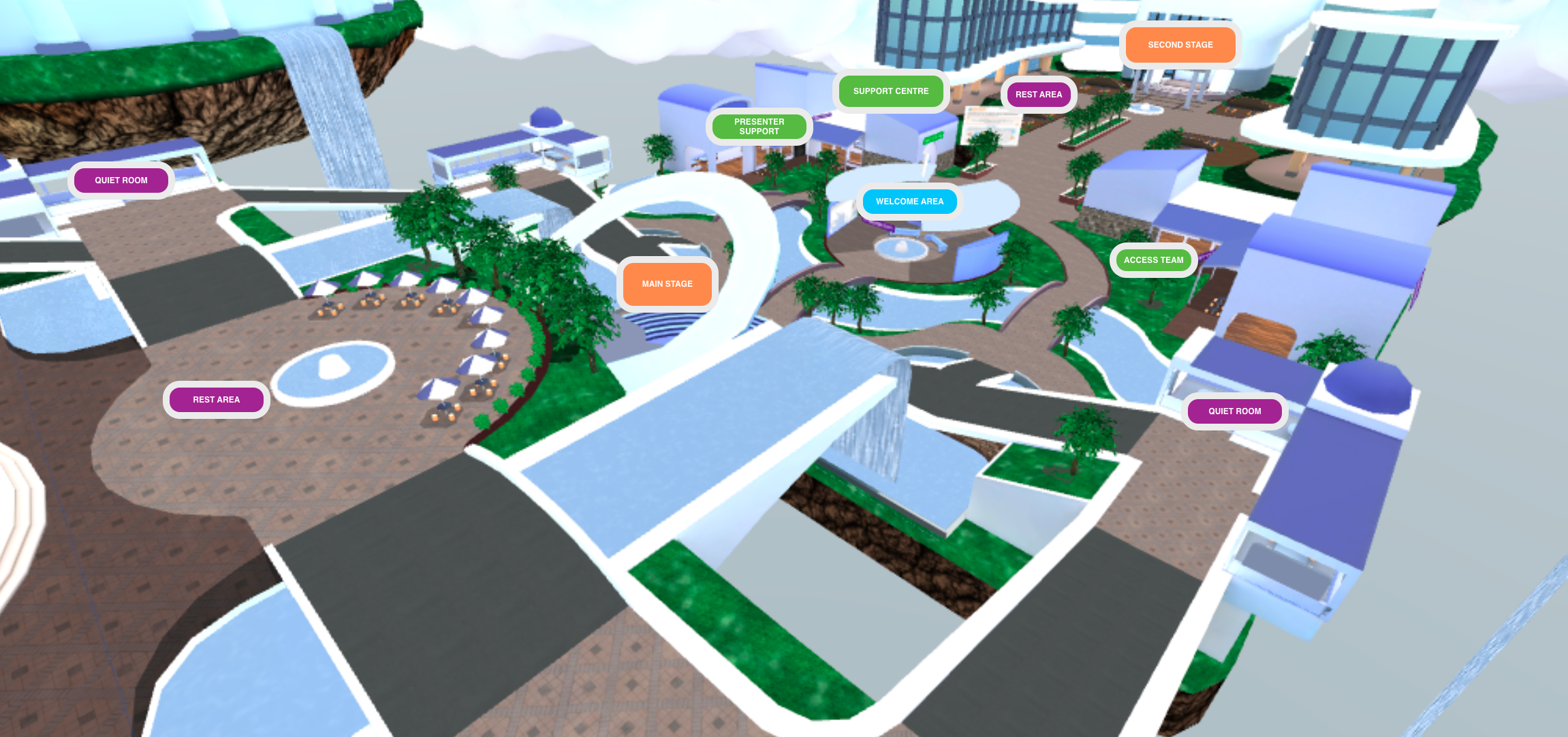
Features:
2 x private volume web boards (screen sharing)
Support Centre
- Room for how to submit via easy chair - slide decks and graphics.
- Short cut guides
- Spawn Point URL: https://framevr.io/ilrn-conference#submissionhelp
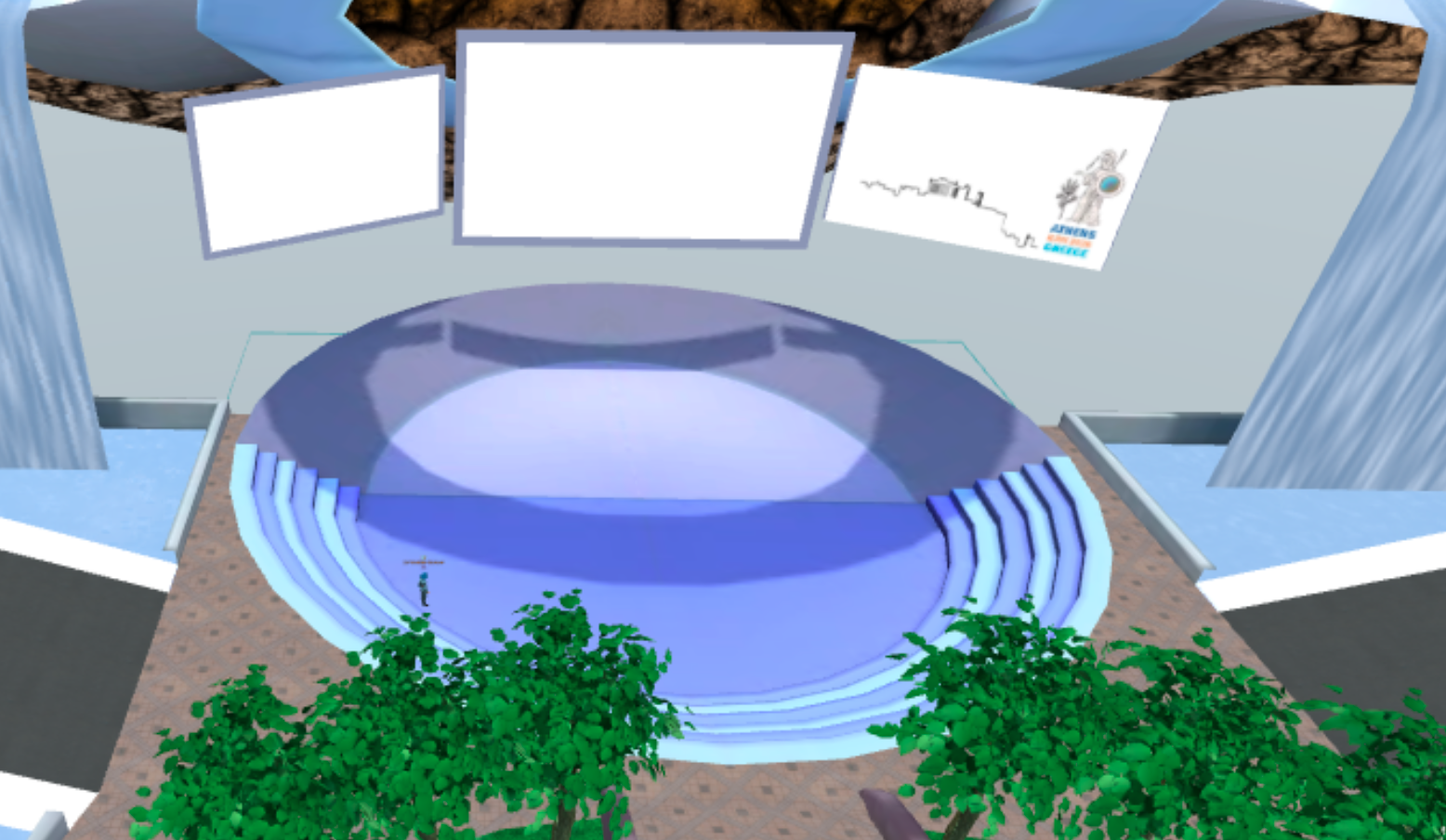
Main Stage
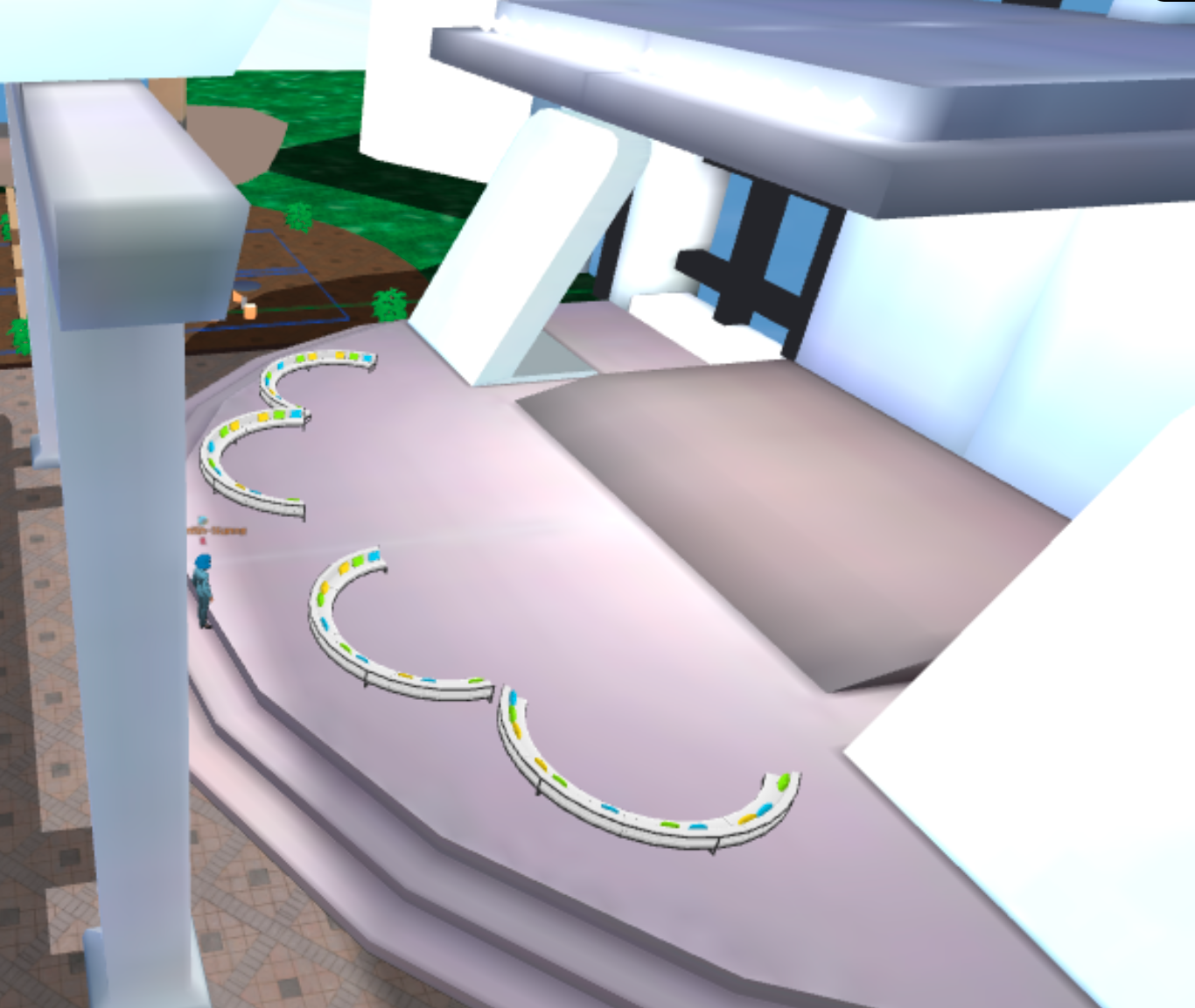
Second Stage
iLRN2026 WebSite Updates
Nov 26 2025
The following website updates are required:
In the call-for-papers page update the text as follows
https://www.immersivelrn.org/ilrn2026/call-for-papers/
KEYNOTE AND FEATURED TALKS
In-person Keynote - Prof. Guido Makransky, University of Copenhagen
In-person Keynote - Prof. David Joseph Brown, Nottingham Trent University
In-person Keynote - Prof. Eleni Kyza, Cyprus University of Technology
Online Keynote - Prof. Barney Dalgarno, University of Canberra
In-person Feature Speaker - Dr. Elina Megalou, Diophantus
In-person Feature Speaker -Daniel Mitelpukt, Diophantus, Imperial College London
In-person Feature Speaker - Prof. Michalis Paraskevas, University of Peloponnese
Online Feature Speaker - Prof. Panayiotis Koutsabasis and Assoc. Prof. Spyros Vosinakis, University of the Aegean
Online Feature Speaker - P.L. Vassiliki Bouki, University of Westminster
Remove the following content from the In the call-for-papers page and move it to the
https://www.immersivelrn.org/ilrn2026/program-overview/
Replace the Aitherion Experience with Science and Technology Museum
CONFERENCE OVERVIEW
iLRN2026 Program will bring together researchers, educators, and innovators from around the world to explore the future of immersive learning. Through keynotes, paper presentations, workshops, and hands-on experiences, participants will engage with the latest developments in XR, simulations, virtual worlds, and AI-powered learning environments. Beyond the academic program, attendees will enjoy a rich social schedule packed with opportunities to explore the beauty and history of Athens—a city that not only inspires with its ancient landmarks but also showcases its modern capacities for immersive and experiential learning. Here is an overview of the conference program.
| iLRN2026 Conference Overview | ||||
| Friday, June 26, 2026 | Saturday, June 27, 2026 | Sunday, June 28, 2026 | Monday, June 29, 2026 | Tuesday, June 30, 2026 |
| Hosting Location | Hosting Location | Hosting Location | Hosting Location | |
| Pre-Conference Day Tour at Nafplio | The Great Hall, NKUA Rectorate Building, Downtown, Athens | Department of Pedagogy & Primary Education, NKUA, Kolonaki, Athens | Department of Pedagogy & Primary Education, NKUA, Kolonaki, Athens | Department of Pedagogy & Primary Education, NKUA, Kolonaki, Athens |
| Join us for a day trip to Nafplio, a charming seaside town in the Peloponnese, just two hours from Athens. Once the first capital of modern Greece, Nafplio is known for its scenic harbor, Venetian and Neoclassical architecture, and romantic atmosphere. We'll visit the Palamidi Fortress and Bourtzi Castle, swim in crystal-clear waters, and enjoy a relaxed stroll and dinner in the old town before heading back to Athens. | Welcome Ceremony | |||
| Keynote* | Keynote* | Keynote* | ||
| Featured Talk | Featured Talk | Featured Talk | Featured Talk | |
| TECH-EDU - DSAI | ||||
| Presentations | Presentations | Presentations | Presentations | |
| Workshops - Posters - Demos | Workshops - Posters - Demos | Closing Ceremony | ||
| Nafplio | Social Program | |||
| Acropolis Museum |
+ Awards Ceremony |
|||
| Visit the first university established in Greece, originally housed in a historic building in Plaka—the oldest neighborhood in Athens—at the foot of the Acropolis. NKUA | Game Night | Conference Dinner | ||
- Keynote Speakers
Guido Makransky, University of Copenhagen
David Joseph Brown, Nottingham Trent University
Eleni Kyza, Cyprus University of Technology
Create a link to the keynotes speakers page
Change the title to Athens In-Person Program Overview
We will also need another page for the Online & in VR Program Overview
In the following page
https://www.immersivelrn.org/ilrn2026/registration-fees/
Monday, June 29, 2026
Aitherion Experience (included in the fee)change this to Science and Technology Museum (included in the fee)
Awards 2026 Process Codex
Document Status: Operational Codex
Applies to: Annual iLRN Conference
Primary Owners: Awards Chairs
Contributors: General Chairs, Programme Chairs, iLEAD Chairs, Publications Team, Web Team
1. Purpose of This Codex
This codex defines the standardised process, roles, tasks, and timeline for the planning, management, and delivery of the iLRN Awards.
Its purpose is to:
-
Ensure consistency, transparency, and fairness in the awards process
-
Support efficient handover between conference years
-
Reduce reliance on informal knowledge or ad hoc decision-making
-
Provide a single authoritative reference for Awards Chairs
High-Level Timeline Overview
2. Roles and Responsibilities
2.1 Awards Chairs
The Awards Chairs are responsible for the end-to-end coordination of the awards process, including:
-
Defining award categories and criteria
-
Managing jury panels
-
Overseeing nominations and voting
-
Preparing awards materials and ceremony assets
-
Coordinating with all relevant committees
2.2 Programme Chairs
-
Nominate shortlisted contributions for awards
-
Support clarification of academic categories and eligibility
2.3 iLEAD Chairs
-
Nominate shortlisted iLEAD contributions
-
Advise on iLEAD-specific award categories and criteria
2.4 General Chairs
-
Oversee alignment with conference programme and ceremony
-
Support awards presentation during the conference
2.5 Publications & Web Teams
-
Publish awards-related content on the website
-
Archive final awards outcomes post-conference
3. Awards Process Overview
The awards process is organised into six sequential phases:
-
Awards Design & Governance
-
Jury Panel Setup
-
Nominations & Materials Preparation
-
Jury Voting
-
Awards Assets & Ceremony
-
Post-Conference Wrap-Up
Each phase has defined tasks, outputs, and dependencies.
4. Phase 1 — Awards Design & Governance
Timeline: Before CFP launch (approximately T–9 to T–8 months)
4.1 Define Awards Structure
Tasks
-
Review existing award categories
-
Reduce and refine categories to avoid duplication and overload
-
Confirm awards across:
-
Academic track
-
iLEAD track
-
Reviewers
-
Posters and Workshops (if applicable)
-
Outputs
-
Final list of award categories
-
Short description for each award
4.2 Define Evaluation Criteria
Tasks
-
Finalise evaluation criteria per award category
-
Ensure criteria are:
-
Clear and concise
-
Distinct across categories
-
Suitable for independent jury voting
-
Outputs
-
Approved criteria text for:
-
Jury instructions
-
Voting forms
-
Website publication
-
4.3 Decide Nomination and Voting Model
Tasks
-
Confirm nomination source (Programme Chairs / iLEAD Chairs)
-
Confirm voting model:
-
Independent jury voting
-
No written reviews required
-
-
Confirm voting platform (Tally)
-
Confirm number of nominations per category (typically three)
Outputs
-
Written description of awards process
4.4 Publish Awards Information
Tasks
-
Prepare awards webpage content
-
Publish awards information once CFP is live
Outputs
-
Public awards webpage with:
-
Award categories
-
Criteria
-
High-level process description
-
5. Phase 2 — Jury Panel Setup
Timeline: Approximately T–6 to T–5 months
5.1 Identify and Invite Jury Panel Members
Tasks
-
Identify potential jury members in collaboration with:
-
Awards Chairs
-
Programme Chairs
-
iLEAD Chairs
-
-
Aim for approximately 20 jury panel members
-
Send formal invitation emails (Academic and iLEAD variants)
Outputs
-
Jury invitation emails sent
-
Jury tracking spreadsheet (contacted / agreed / pending)
5.2 Collect Jury Metadata and Consent
Tasks
-
Create a Tally form to collect:
-
Name
-
Title
-
Affiliation
-
Consent to be publicly listed
-
-
Ensure GDPR-compliant consent wording
Outputs
-
Completed jury metadata list
-
Approved jury panel list for website publication
6. Phase 3 — Nominations & Materials Preparation
Timeline: Approximately T–3 to T–2 months
6.1 Collect Award Nominations
Tasks
-
Create and distribute the awards nominations spreadsheet
-
Monitor submissions and follow up on missing nominations
Outputs
-
Completed nominations spreadsheet
-
Final shortlist per award category
6.2 Prepare Anonymised Award Materials
Tasks
-
Download nominated submissions
-
Anonymise documents consistently
-
Organise files in Google Drive by award category:
-
Academic
-
iLEAD
-
Outputs
-
Jury-ready anonymised folders
6.3 Create Jury Voting Forms
Tasks
-
Create separate Tally voting forms per award group
-
Embed:
-
Award description
-
Evaluation criteria
-
Links to anonymised submissions
-
-
Test all forms before distribution
Outputs
-
Finalised jury voting forms
7. Phase 4 — Jury Voting
Timeline: Voting window of approximately two weeks
7.1 Distribute Voting Forms
Tasks
-
Send voting instructions to jury panel members
-
Clearly communicate:
-
Voting deadline
-
Expected workload
-
Contact for support
-
Outputs
-
Voting emails sent
-
Vote tracking in place
7.2 Monitor and Close Voting
Tasks
-
Monitor response rates
-
Send reminders if required
-
Close voting at deadline
-
Export and securely store results
Outputs
-
Final voting results per award category
8. Phase 5 — Awards Assets & Ceremony
Timeline: Approximately T–1 month to conference
8.1 Create Awards Communication Assets
Tasks
Outputs
-
Awards communication assets
-
Final website-ready awards content
8.2 Certificates
Tasks
-
Finalise certificate template
-
Generate certificates for:
-
Award winners
-
Nominated contributions (if applicable)
-
-
Print certificates for onsite ceremony
-
Email digital certificates post-conference
Outputs
-
Printed certificates
-
Digital certificates distributed
8.3 Awards Ceremony Support
Tasks
-
Support General Chairs with:
-
Awards presentation slides
-
Ceremony narrative/script
-
-
Verify accuracy of:
-
Names
-
Affiliations
-
Award titles
-
Outputs
-
Final awards presentation
-
Approved ceremony narrative
9. Phase 6 — Post-Conference Wrap-Up
Timeline: Within two weeks post-conference
9.1 Publication and Archiving
Tasks
-
Update website with final award outcomes
-
Acknowledge jury panel members
-
Archive all awards materials and documents
-
Prepare handover notes for next year’s Awards Chairs
Outputs
-
Completed awards archive
-
Updated Awards Codex for future use
10. Review and Maintenance
This codex should be:
-
Reviewed annually by the Awards Chairs
-
Updated to reflect process improvements
-
Archived alongside conference documentation
iLRN2026 Program Chairs
iLRN2026 Program Chairs - General info and links
Drive Folder: https://drive.google.com/drive/u/2/folders/1PM58-Gi6kG6GYbXRYg0A57eKiporqIxi
iLRN2026 iLEAD Program Chairs
1 Submission Phase
- Call for Papers: https://www.immersivelrn.org/ilrn2026/call-for-papers/
- iLEAD Submission information: https://www.immersivelrn.org/ilrn2026/ilead-stream/
2 Review Phase
- Reviewers who signed up: https://docs.google.com/spreadsheets/d/1tcZeFKKT0VtWZ8yzmCcR4fsCeUkmOYX-bKVdfeAF1oY/edit?gid=0#gid=0
- Documentation of reviewer invitations and quality: https://docs.google.com/spreadsheets/d/1VmqV91lxnYCN3y0ifVoow9MwrEuVmvWWDY87QYdON5k/edit?usp=sharing
- Templates for messages to reviewers:
- Review guidelines:
3 Decision Phase
- Notification templates: https://docs.google.com/spreadsheets/d/1VmqV91lxnYCN3y0ifVoow9MwrEuVmvWWDY87QYdON5k/edit?usp=sharing
4
iLRN2026 Academic Program Chairs
1 Submission Phase
- Call for Papers: https://www.immersivelrn.org/ilrn2026/call-for-papers/
- Academic Submission information: https://www.immersivelrn.org/ilrn2026/academic-stream/
- DC Submission information: https://www.immersivelrn.org/ilrn2026/doctoral-colloquium-dc/
2 Review Phase
Reviewer invitations and assignments
- Reviewers who signed up and were invited: https://docs.google.com/spreadsheets/d/1vD5IsZO2dfHQaghotRX-6P8W5QFORklIcc-D_uPGqj4/edit?gid=0#gid=0
- Documentation of reviewer invitations and quality: https://docs.google.com/spreadsheets/d/1VmqV91lxnYCN3y0ifVoow9MwrEuVmvWWDY87QYdON5k/edit?usp=sharing
- Templates for messages to reviewers: https://docs.google.com/document/d/1JEnjOjWnt0QMJg6ueu_sIuLCQh-gTVksHToMnQP43xE/edit?usp=sharing
Review guidelines:
- Full/Short Papers: https://codex.immersivelrn.org/books/public-instructions-for-reviewers/page/reviews-for-academic-stream-full-short-papers-oral-presentation
- Extended Abstracts: https://codex.immersivelrn.org/books/public-instructions-for-reviewers/page/reviews-for-academic-stream-extended-abstracts-poster-presentation
- Doctoral Colloquium: https://codex.immersivelrn.org/books/public-instructions-for-reviewers/page/reviews-for-academic-stream-doctoral-colloquium-paper-oral-presentation-in-dc-session
3 Decision Phase
- Notification templates: https://docs.google.com/spreadsheets/d/1VmqV91lxnYCN3y0ifVoow9MwrEuVmvWWDY87QYdON5k/edit?usp=sharing
4 Camera-Ready and Publication Phase
- Springer CRV guidelines: https://codex.immersivelrn.org/books/public-instructions-for-authors/page/instructions-for-camera-ready-submission-springer-publication
- iLRN Proceedings guidelines: https://codex.immersivelrn.org/books/public-instructions-for-authors/page/instructions-for-camera-ready-submission-ilrn-proceedings-publication