
Case – VR Training for wind turbine maintenance
Case – VR Training for wind turbine maintenance
(Cassola et al.)
This
UNDER case describes a wind-turbine generator maintenance training program developed with an immersive authoring tool that allows expert trainers to design the VR training from inside the virtual environment itself.1,4 The Immersive Learning Case Sheet (ILCS) method is used here to organise the description and interpretation.1
1. Case identificationCONSTRUCTION
Case title:
VR training for wind turbine generator maintenance
Contributors:
Case description prepared by Dennis Beck and Leonel Morgado, based on the work of Fernando Cassola and colleagues at INESC TEC and Vestas Wind Systems.1,4
Original source(s):
Cassola, F., et al. (2022). Design and Evaluation of a Choreography-Based Virtual Reality Authoring Tool for Experiential Learning in Industrial Training (IEEE Transactions on Learning Technologies).4
Case interpretation using ILCS: Beck & Morgado (2025).1
Supplementary materials and media: https://vrtraining.inesctec.pt/.5
Time frame:
Tool development and study in collaboration with an international wind-energy company, with experiments reported in 2022.4
2. Short description (abstract)
Case title:VR training for wind turbine generator maintenanceContributors:Case description prepared by Dennis Beck and Leonel Morgado, based on the work of Fernando Cassola and colleagues at INESC TEC and Vestas Wind Systems.1,4Original source(s):Cassola, F., et al. (2022). Design and Evaluation of a Choreography-Based Virtual Reality Authoring Tool for Experiential Learning in Industrial Training (IEEE Transactions on Learning Technologies).4Case interpretation using ILCS: Beck & Morgado (2025).1Supplementary materials and media:https://vrtraining.inesctec.pt/.5Time frame:Tool development and study in collaboration with an international wind-energy company, with experiments reported in 2022.4
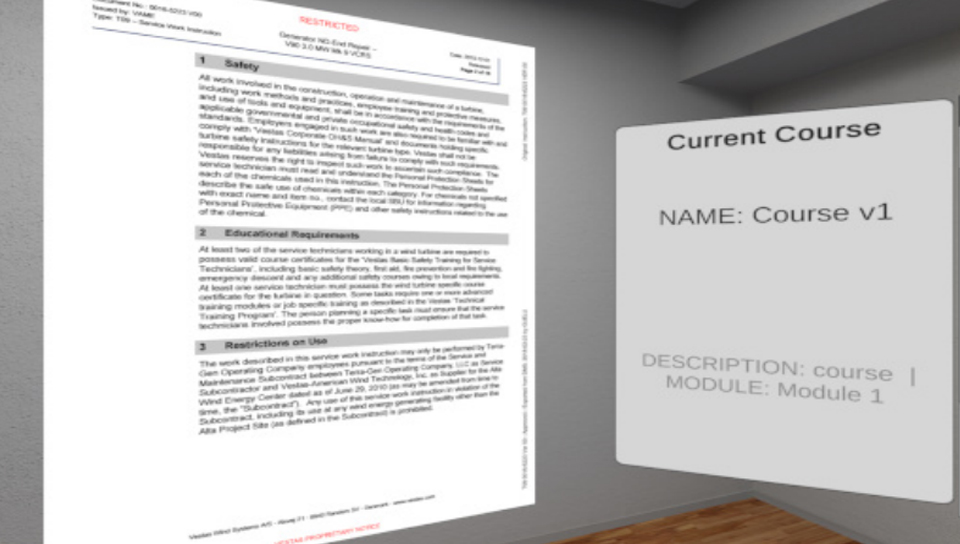
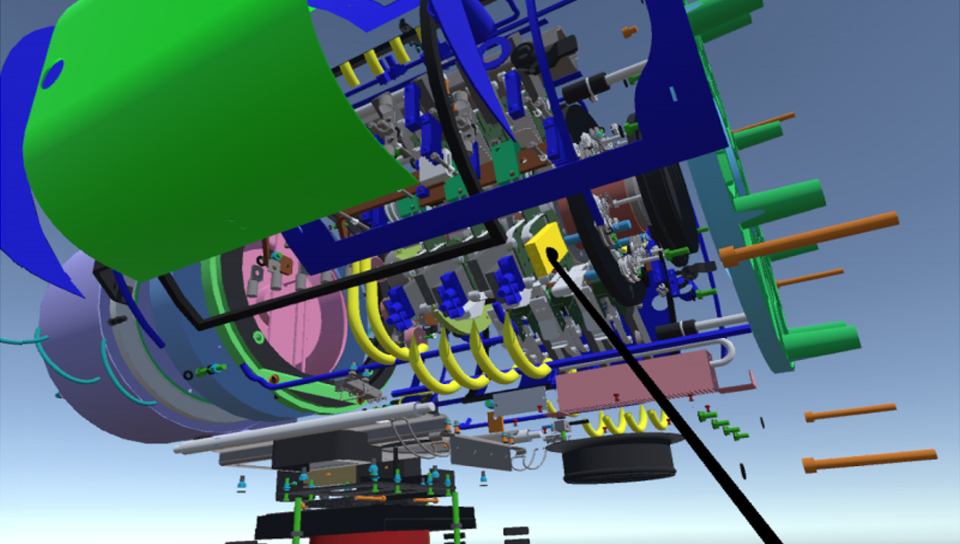
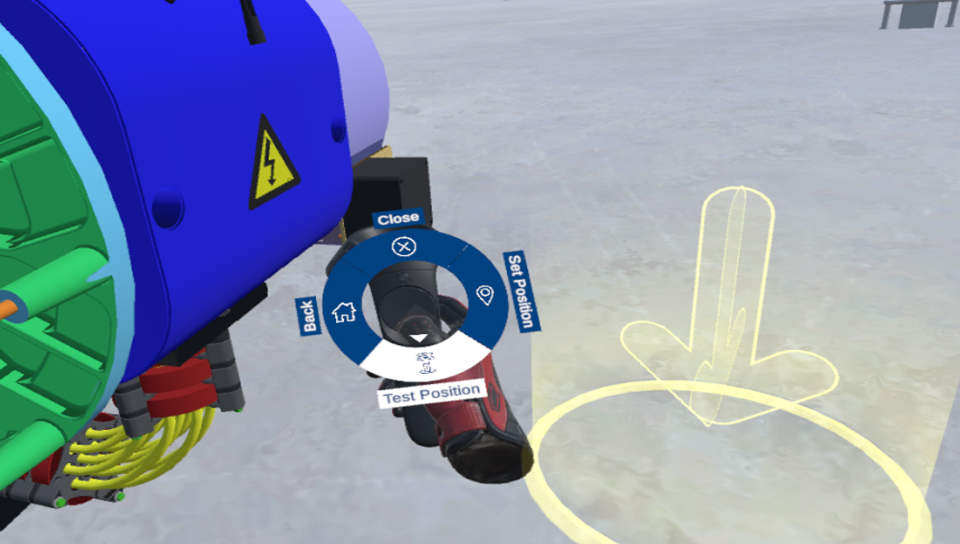
Expert trainers from a wind-energy company use an immersive authoring tool to design a multi-step VR course on generator disassembly and maintenance, based directly on existing technical documentation and CAD models of a real turbine.4,5 Their own performance is recorded as “virtual choreographies”, which become the reference procedures for the course. Trainees then practise these procedures on a virtual generator, while consulting digital manuals and replaying expert demonstrations as needed. The system checks each step for correctness, logs errors, and produces analytics on task completion. Finally, technicians perform the same procedure on a physical generator in a warehouse setting for certification. The case focuses on using immersion to support authentic, repeatable, and risk-free rehearsal of complex maintenance procedures and to bridge VR training with real-world performance.1,4